


Key Takeaways
- Peak brightness tells you what a watch does under ideal conditions not what it does when you actually need it, which is rarely the same thing.
- Always-on illumination removes preparation entirely to ensure the watch is readable the moment you raise your wrist, regardless of what preceded that moment.
- Continuous illumination is a systems reliability argument because consistent 80% performance is worth more than occasional 100% under conditions you cannot control.
- An always-on tritium watch glows for up to 20 years without charging makes it the only technology that consistently answers the always-on requirement across its full working life.
The Myth of Brighter Is Better
Spend time with the people who depend on a watch in the dark: Special Forces operators, divers, paramedics on nights. You notice something. None of them talk about brightness. They talk about whether it was readable when they needed it. That gap is where most buyers go wrong.
Peak output is easy to put a number on, so that's what gets emphasised. A torch is something you choose to switch on. A watch is read in a fraction of a second, in conditions you didn't plan for. Evaluating both by the same measure is the wrong question.
Tritium brightness vs intensity is the more honest comparison. Intensity at a single moment tells you nothing about availability across all moments.
Why Bright Is Not Always Readable
There's a problem that rarely gets discussed. An eye adapted to darkness becomes acutely sensitive to light. A sudden high-intensity output from a watch dial won't help you read the time faster. It causes a brief moment of glare before your eyes adjust. Passive watch illumination at a balanced glow level works with an adapted eye. A sudden brightness spike works against it.
What Matters in Low Light
In our experience, readability in low-light conditions comes down to three things that peak brightness measurements don't address.
The first is availability. Is the watch readable the moment you need it, without any deliberate preparation? Instant readability and watch legibility at night, without tilting, seeking a light source, or wondering about charge, should not be conditional features for a constant-wear tool.
The second is consistency. Does the glow behave the same way whether it spent the last hour in sunlight or eight hours in a dark room? Any system that changes output based on prior light exposure introduces a variable that serious users cannot afford.
The third is whether it is appropriate for dark-adapted vision. A stable glow that dark-adapted eyes can read comfortably is more useful than a high-intensity burst that disrupts visual sensitivity built up over hours.
Practical Watch Brightness Explained
The way we think about practical brightness isn't as a number but as a question: will this watch be readable, right now, without any input from me? If the answer depends on conditions you do not control, the watch is not meeting the standard a continuous glow watch should meet.
Instant Visibility vs Temporary Brightness
Here is a scenario worth sitting with. You are eight hours into a night shift. You need to know the time. You raise your wrist.
If you are wearing a watch that depends on charged lume, the answer depends entirely on what happened before your shift started. Whether it spent the evening under a lamp. Whether the charge from this morning has held. You don't know, and at that moment, you can't find out.
If you are wearing a backlit watch that requires the pressing of a button to be able to read the time while wearing gloves, using cold and dirty hands in critical conditions could result in serious consequences.
A constant illumination watch has one answer for every version of that scenario. It glows. You read it. The conditions that preceded that moment are irrelevant.
The distinction between instant watch readability and readability that depends on preparation is the core of the always-on argument. It's not about absolute brightness. It's about having a reliable watch glow without charging, available at the exact moment it's needed rather than under the conditions that suit it best.
 The MX10 Storm field watch. Readable in complete darkness without charging, without preparation, without conditions.
Continuous vs Momentary Illumination
Momentary illumination operates in spikes. There's a peak, then decline. Every lume-powered dial is at its best immediately after charging and less useful from that point forward. Continuous illumination doesn't spike or decline. The output is consistent and self-sustaining. There's no best moment because there's no charging cycle.
Why Consistent Glow Beats Peak Output
A watch that performs consistently at a reliable level is worth more in any demanding environment than one that peaks impressively under conditions that rarely exist in the field. With momentary illumination, once the charge is depleted, you're reading a dark dial. With continuous illumination, what you get on day one is what you get on year five. That difference matters when readability at any given moment is not something you can predict or control. Explore how tritium compares to traditional lume for the full picture on watch glow reliability.
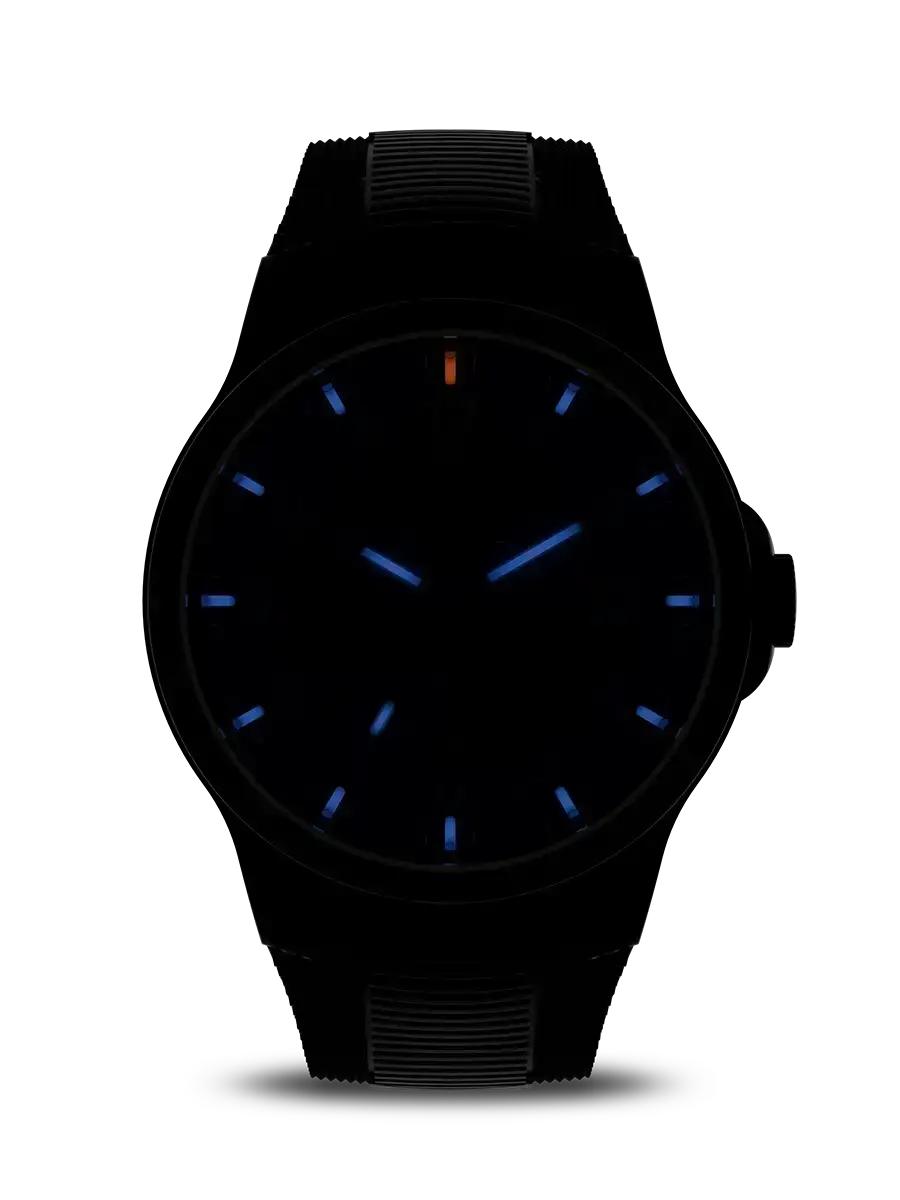 The MX10 Horizon field watch. Constant illumination, always-on tritium glow. Day one performance on year five.
Professional Reliability
When equipment is selected for professional use, the question is never peak performance under ideal conditions. It's about achieving minimum guaranteed performance under the worst conditions likely to be encountered.
Tritium illumination answers that question consistently. Our tubes come from mb-microtec in Switzerland, the originators of GTLS technology and the global standard for military services. The glow doesn't pause, doesn't require light input, and doesn't need managing. It glows underwater. It glows at the end of a twelve-hour shift when the charge on lume gave out hours ago without prior action required.
Always-On Illumination for Night Shift and Tactical Use
We've built watches for tactical operators, healthcare workers, and emergency responders who reach the same conclusion: reliability over intensity is what matters. Night visibility that depends on prior charging isn't night visibility you can count on. The history of military watch selection reflects this. Our guide for night shift workers covers the practical considerations in detail.
Practical Buying Decision
The right question when choosing a watch for low-light use isn't how bright it is. It's whether it's readable right now, without preparation, in whatever conditions you happen to be in.
The MX10 field watch was originally supplied to UK Special Forces. Not because it won a brightness comparison but because it didn't let people down. It performed consistently and unconditionally in whatever conditions the operator faced, and that's the only standard that matters in the field.
Unconditional readability across all conditions is the standard we hold every piece of equipment to, and it's the right one to apply to any field watch purchase. Equipment that glows reliably for years without any input will serve you better than one that peaks impressively and fades. Our military and adventure watch buying guide is a useful next step.
FAQ
Is a brighter watch always more readable in the dark? No. Peak brightness reflects output under optimal conditions immediately after charging. A consistent lower-level glow throughout an operation is more reliably readable than one that peaks brightly and fades. Readability depends on availability and consistency, not peak output.
What is the difference between instant visibility and charged glow? Instant visibility means it's readable on the first wrist check, no preparation required. Charged glow means readability depends on recent light exposure. That difference determines whether it's reliable equipment or something you have to actively manage.
Can a watch be too bright in a fully dark environment? Yes. Eyes adapted to darkness are sensitive to light. High-intensity output causes brief glare that disrupts night vision before your eyes adjust. A stable lower-level glow is the practical choice.
How long does tritium illumination last without charging? Tritium illumination requires no charging. Nite watches use Swiss-sourced tritium tubes providing continuous glow for up to 20 years, remaining readable throughout without any input from the wearer.


